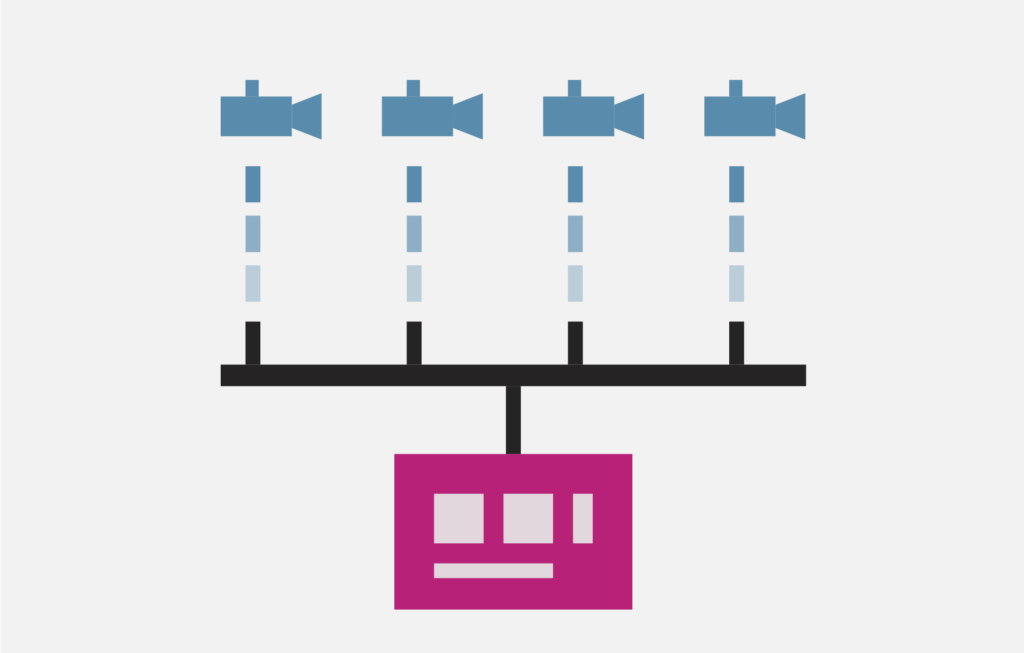
BYOC: Why the Best Cameras for IoT Are the Ones You Already Own

In modern industrial facilities, data is currency. Plant managers, continuous improvement experts, and operations executives are under constant pressure to optimize cycle times, eliminate bottlenecks, and ensure workplace safety. To achieve this, organizations have rapidly adopted the Industrial Internet of Things (IIoT), blanketing assembly lines and warehouses with physical proximity switches, vibration monitors, and thermal sensors.
However, as facilities strive for greater fidelity and granularity in their operational analytics, they can get held up by the assumption that they must buy new visual sensors. Can you just use cameras for IoT?
When organizations realize they need visual data to understand why a machine is idling or how a process bottleneck forms, they immediately search for specialized cameras for IoT. The standard instinct is to buy new hardware: expensive, proprietary smart cameras packed with onboard processors.
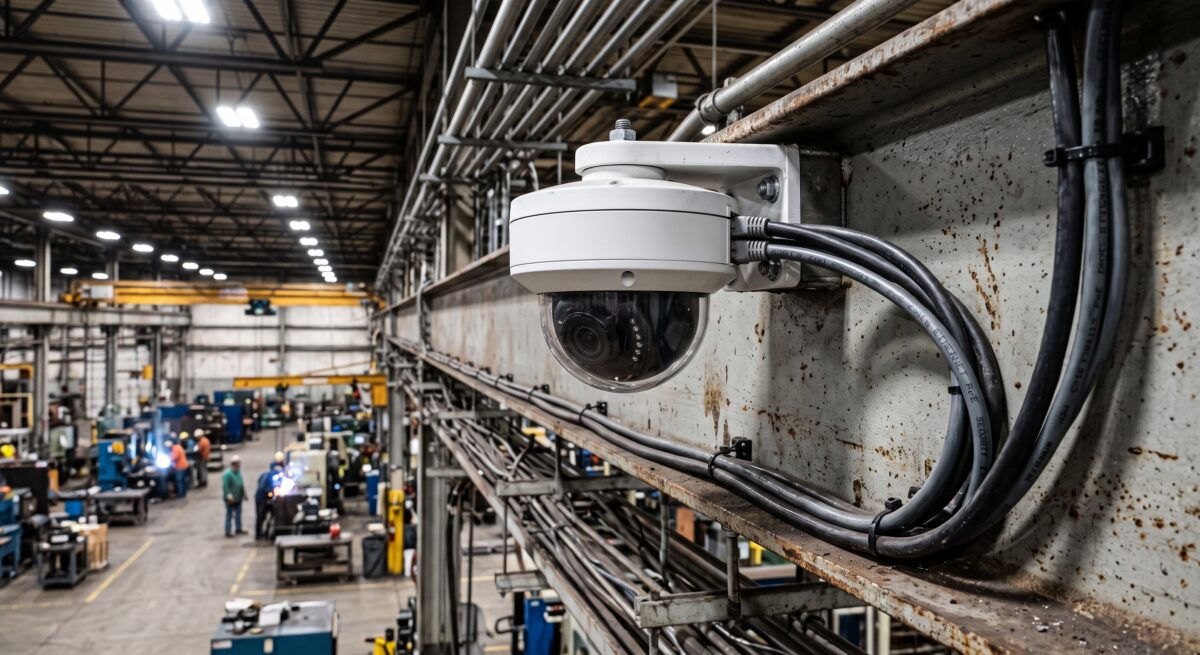
But adding more isolated hardware devices introduces massive capital expenditure, long deployment timelines, and intense integration friction. The reality is that sufficiently powerful smart vision IoT cameras aren’t sitting in a supplier’s warehouse for you to order them. They are already mounted to your factory walls and ceilings.
By shifting the strategy from hardware acquisition to intelligent software deployment, manufacturers can transform standard surveillance and operational video feeds into advanced IIoT video sensors.
The Core Friction of Hardware-First IoT Cameras
The search for industrial-grade cameras for IoT platforms usually uncovers a landscape dominated by consumer-style smart gadgets or hyper-specific, locked-down edge hardware. For a complex manufacturing ecosystem, these options create several distinct operational hurdles:
- Prohibitive Capital Expenses: Outfitting a large-scale manufacturing plant with new, proprietary AI cameras requires a massive upfront financial investment.
- Infrastructure Disruption: Deploying new hardware means installing new mounting brackets, running fresh Power-over-Ethernet (PoE) cabling, and scheduling disruptive operational downtime.
- Siloed Data Landscapes: Many proprietary IoT cameras operate on closed, ecosystem-specific software. This leaves engineers stuck trying to bridge proprietary video formats with existing enterprise analytics tools.
- Rapid Obsolescence: Edge computing hardware evolves quickly. Buying hardware means locking your plant into fixed processing limitations that become obsolete within a few years.
To bypass these friction points, forward-thinking enterprises are decoupling the physical camera from the analytical intelligence layer.
Software-Defined Vision: Transforming Cameras into IoT Data Engines
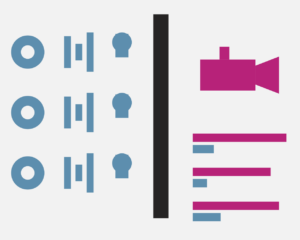
A camera is ultimately just an light collector. Its value isn’t determined by the hardware inside its casing, but by the intelligence analyzing the pixel streams it generates.
This is where software-defined visual intelligence shifts the paradigm. Instead of buying new cameras for IoT applications, platforms like Leela AI act as a unified brain for your existing video networks. By overlaying advanced spatial AI models onto standard AXIS ACAP/RTSP (Real-Time Streaming Protocol) or ONVIF-compliant IP camera feeds, software upgrades legacy assets into dynamic data engines.
[Legacy IP Camera] —> [AXIS ACAP/RTSP Feed] —> [Leela AI Engine] —> [Structured IIoT Telemetry]
(For more information on our preferred camera system, please read more about AXIS cameras and the ACAP ecosystem from our partner, Axis Communications).
This software-layer approach completely reshapes deployment dynamics:
- Instant Operational Scale: Because the software utilizes standard streaming protocols, you can connect dozens of cameras to an AI framework simultaneously. There is no need to wait for hardware shipments or wiring crews.
- Hardware Agnostic: Software-driven intelligence works across varied environments. It processes video from high-end systems in the Axis Communications Partner Network just as easily as it handles entry-level facility security cameras.
- Flexible Hybrid Architecture: Processing can scale dynamically. You can deploy edge ML camera integration on local plant servers to minimize external bandwidth usage, or route data to a centralized cloud system for cross-facility benchmarking.
Translating Pixels to Telemetry: How Visual IoT Differs from Physical Sensors
Traditional IIoT deployments rely heavily on discrete, physical sensors. While proximity sensors, photo-eyes, and limit switches excel at tracking binary events—such as confirming a part crossed a specific baseline—they remain fundamentally blind to context.
If an assembly line stops, a physical proximity sensor can log the timestamp of the stoppage. It cannot, however, explain why the line stopped. Was the operator waiting for material replenishment? Was there an ergonomic struggle with a complex sub-assembly? Did a component misfeed cause a minor jam?
Configuring your cameras for IoT data visualization fills these analytical gaps. A single video stream analyzed by spatial AI replaces dozens of isolated physical sensors. The software tracks the entire operational lifecycle, automatically recognizing human movements, tool interactions, material flows, and machine states.
Instead of dealing with fragmented binary data points, continuous improvement teams receive a complete, contextualized timeline of their operations. The video feed becomes an advanced telemetry stream, automatically logging accurate cycle times, micro-stoppages, and process variations.
Seamless Integration with the Enterprise IIoT Ecosystem
For visual data to drive true operational transformation, it cannot exist inside an isolated video dashboard. It must communicate natively with the broader enterprise technology stack.
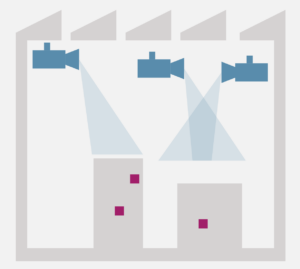
The ultimate value of optimizing cameras for IoT networks lies in ecosystem interoperability. When visual AI processes raw video into structured data (such as cycle durations, idle percentages, or error flags), it packages that information into standard, lightweight data formats like MQTT or JSON webhooks.
This allows visual insights to flow directly into existing enterprise applications:
- IIoT Platform Integration: Visual data streams seamlessly into central operations command centers, such as the PTC ThingWorx IIoT Platform, correlating visual cycle times directly alongside machine health data.
- MES and ERP Syncing: Real-time production counts and step completions can automatically validate work orders inside your Manufacturing Execution System (MES) or Enterprise Resource Planning (ERP) platform.
- BI Dashboards: Operations leaders can compile visual analytics directly into corporate PowerBI, Tableau or other dashboards, allowing for comprehensive cross-plant efficiency comparisons.
The Path Forward: Auditing Your Current Visual Infrastructure
Before executing a costly hardware upgrade, take a step back and audit the video camera infrastructure already running inside your facility.
Look at your existing security cameras, quality control lenses, and operational monitoring feeds. With the right software-defined AI layer, those exact cameras can immediately begin functioning as advanced industrial IoT (IIoT) data nodes. You don’t need a massive hardware budget to build a world-class smart factory—you simply need to unlock the intelligence hidden inside the video streams you already capture.