
The Engineer Who Knows Everything Has No Time to Explain It

This post, "The Engineer Who Knows Everything Has No Time to Explain It", is part of our series on benchmarking and improving operations. To read the rest of this series, start with The Complete Guide to Shift Benchmarking with Visual AI and then check out Continuous Time Studies: Are Your Engineered Standards Still Accurate? , Production Line Benchmarking: Where Should Engineering Resources Go? , Your Best Process Engineer Can’t Watch 400 Stations, and Your Factory Knows More Than Any One Person
Every factory seems to have that one engineer.
The person who knows which machine acts up when the temperature changes. Who remembers why Station 14 was redesigned three years ago. Who can hear about a production problem and immediately name three things worth checking.
When something goes wrong, everyone knows who to call.
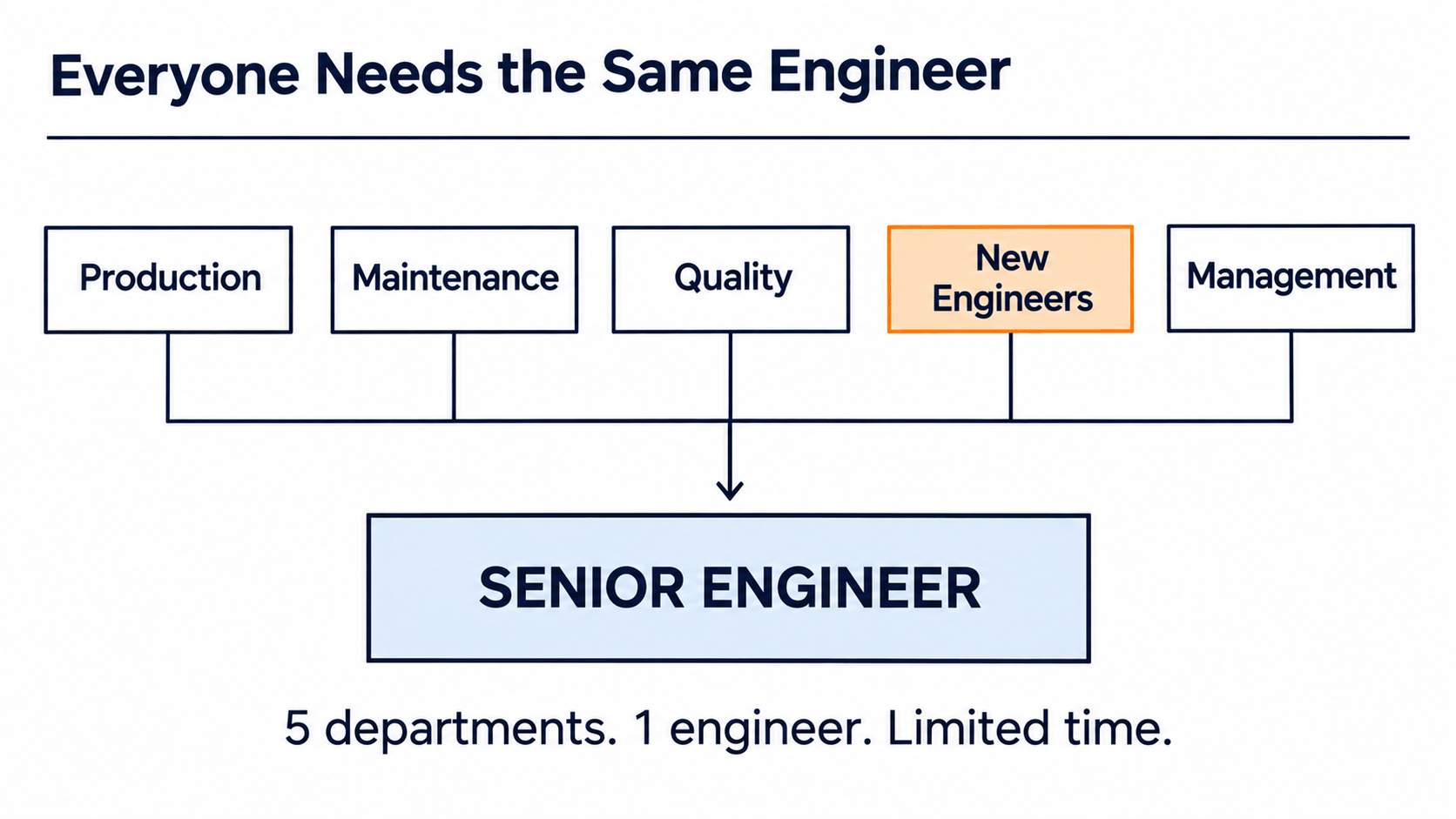
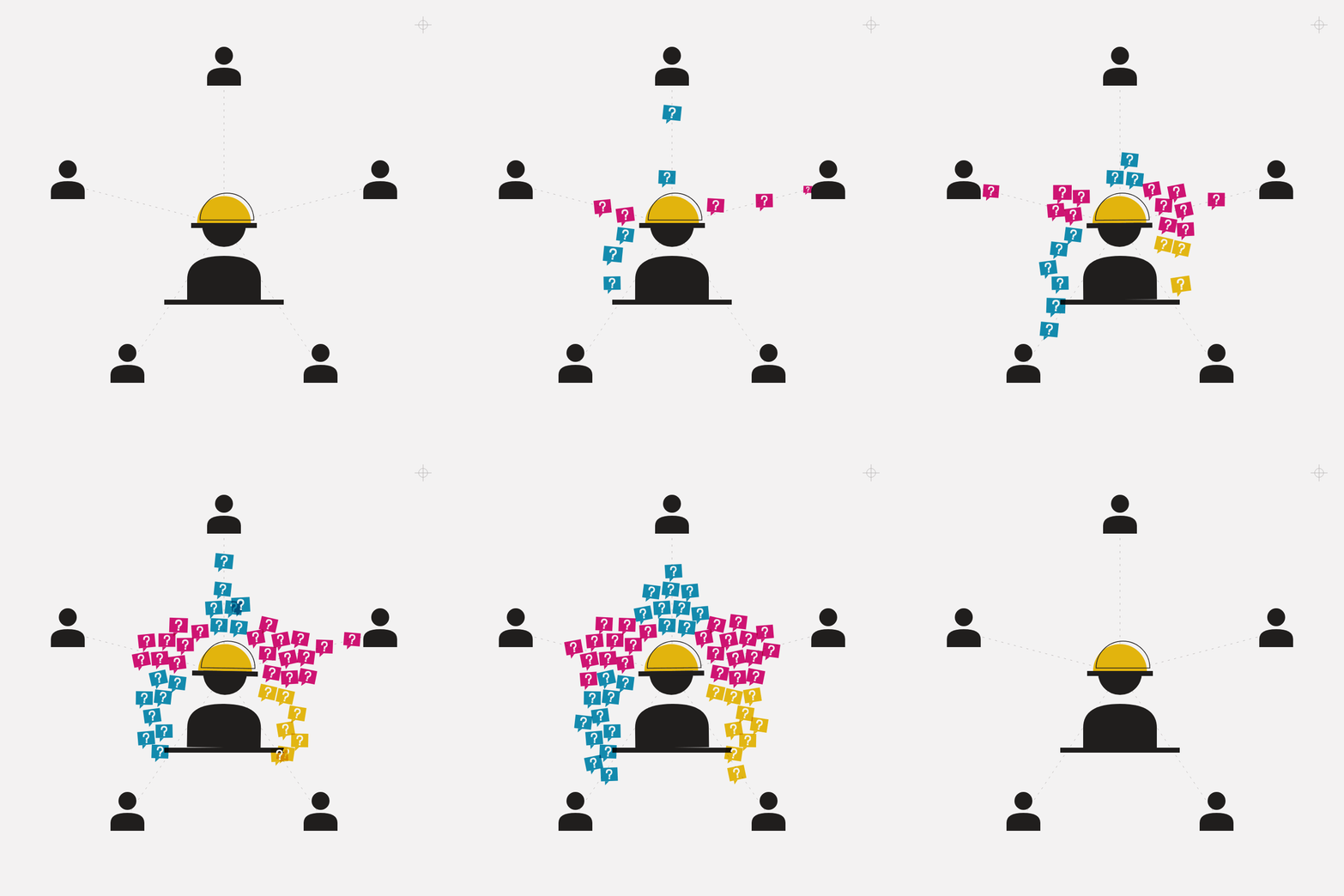
Unfortunately, everyone is calling them.
They’re responsible for keeping production running, investigating problems, improving processes, and somehow finding time to train the next generation of engineers.
That last responsibility usually gets whatever time is left.
And there often isn’t much.
The Problem With Being Indispensable
Imagine a new manufacturing engineer joining a plant with 200 workstations.
They’ve studied manufacturing processes, production systems, and industrial engineering. They understand cycle times, bottlenecks, and line balancing. What they don’t understand is this particular factory.
Which stations tend to fall behind? What does a normal production day look like? Why is the material stored over there? Why does the second shift run a process differently from the first?
These aren’t necessarily questions answered by an engineering degree or a standard operating procedure.
The answers come from spending time on the floor, investigating problems, and learning from experienced employees.
Now consider the person responsible for teaching them.
That engineer has three production issues to investigate, a meeting about next quarter’s capacity requirements, and an operator waiting for help with a recurring equipment problem.
Training the new hire matters. But the production line that’s stopped matters right now.
So the new engineer follows along when possible, asks questions between emergencies, and gradually pieces together how the factory operates.
It’s an inefficient arrangement, but a familiar one.
How Much Knowledge Exists Only in Someone’s Head?
Manufacturers invest heavily in documenting their processes. Work instructions, engineering drawings, standard times, maintenance records, and production reports all preserve important information.
But documentation rarely captures everything an engineer learns through years of troubleshooting.
A work instruction describes how a process should operate. It doesn’t necessarily describe how frequently operators wait for materials, which stations experience the greatest cycle-time variation, or whether a particular problem occurs more often on one shift.
An experienced engineer may know these things from observation.
A new engineer has to discover them.
And when the experienced engineer retires, changes positions, or leaves the company, some of that understanding goes with them.
The factory still has its documentation. What it may lose is the accumulated understanding of how the operation actually behaves.
What If the New Engineer Could Investigate the Past?
Consider a new engineer assigned to improve a manual assembly line.
Their first task is to understand where production time is being lost.
Traditionally, they might begin by reviewing production reports, conducting time studies, speaking with operators, and asking more experienced engineers which stations deserve attention.
Those activities remain useful, but the new engineer is starting with relatively little firsthand knowledge.
Now imagine they have access to several months of continuously collected production activity data.
They can examine which stations spend the most time waiting, how cycle times vary across shifts, and whether certain processes have become slower over time.
Instead of asking a senior engineer, “Which stations usually have problems?” they can begin with a more specific question:
“Station 14 has significantly more waiting time than the other stations. Has that always been the case?”
That’s a much better conversation.
The experienced engineer can spend their limited time explaining the process relationships and engineering considerations behind the data, rather than first helping someone gather the basic observations.
Giving Engineers Access to Operational History
This is one of the opportunities created by visual intelligence.
Leela AI uses cameras to continuously measure configured production activities, including cycle times, operator presence, and value-added versus non-value-added work.
These measurements create a historical record of production behavior that would otherwise require repeated manual observation to reconstruct.
The Leela AI Assistant provides a way to ask questions about that measured activity.
An engineer could investigate questions such as:
“Which stations experienced the most waiting last week?”
“How does Station 14’s cycle time compare across shifts?”
“Where has non-value-added activity increased?”
The answers depend on what a particular deployment measures, but the application is straightforward: engineers can access operational observations without personally witnessing every event.
That matters for experienced engineers managing large production areas. It also matters for new engineers trying to understand processes they’ve never seen before.
Of course, historical activity data won’t explain every engineering decision. It cannot tell someone why a fixture was designed a certain way unless that information has been documented and made available.
But it can preserve something that is frequently lost: an objective record of how production actually performed.
Making Experience Easier to Pass Along
The experienced engineer will still be the person everyone calls when something complicated happens.
Manufacturing involves too many interacting variables for a dashboard or AI Assistant to contain every answer.
But there’s a difference between needing an experienced engineer to interpret a difficult problem and needing them to explain what happened at a workstation last Tuesday.
One requires their judgment. The other may simply require access to information.
The more routine observations a factory can preserve and make accessible, the less dependent every investigation becomes on someone’s memory or availability.
That creates more room for experienced engineers to focus on the work that actually requires their expertise: solving difficult problems, improving processes, and developing the next generation of engineers.
Because the engineer who knows everything should have time to teach someone else.
Unfortunately, everyone is calling them.
They’re responsible for keeping production running, investigating problems, improving processes, and somehow finding time to train the next generation of engineers.
That last responsibility usually gets whatever time is left.
And there often isn’t much.